













Hackers love apps. (Except yours.)

The only cloud-based, pay-as-you-go mobile security solution for brands that mean business. Secure without writing a single line of code.

Trusted by the world’s most-recognized companies.

Experience our security in action.

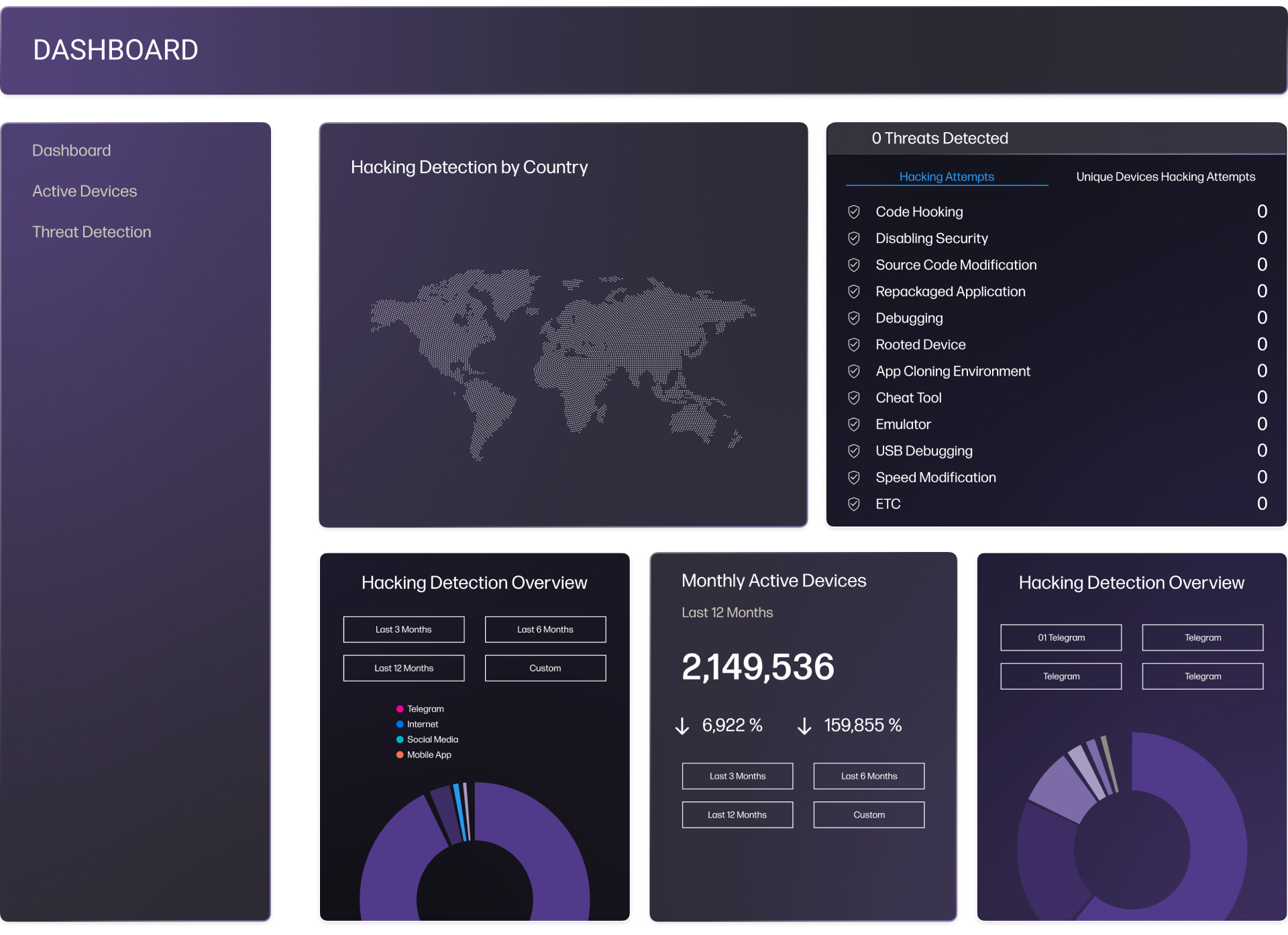
An intuitive dashboard for a bird’s-eye view of everything 
Numbers that set benchmarks.

300 Million

Attacks Blocked

1.7 Million

 Unique Attacks

150 Million

Unique Mobile Device Secured

1.5K Apps

Mobile apps secured

The Challenge and The Solution

In a mobile-first world, attacks are inevitable.

With 6 billion malware attacks a year costing businesses 9+ trillion in cleaning the mess, protection isn’t optional; it’s paramount.  

DoveRunner mobile application security.

Secure your Android and iOS apps with advanced runtime protection and encryption. Compatible with all frameworks, environments, and API architectures.

Best-in-class features for unmatched  mobile app protection.

Zero Coding 

Why let security slow you down? With our no-code features, you focus on building great apps, and we’ll handle their protection.

Zero Day Attack

Reduce exposure to emerging threats with quick detection and mitigation against vulnerabilities unknown to vendors.

Runtime Application Self Protection (RASP)

Stay ahead of every threat. RASP delivers real-time protection against source code tampering, debugging, and network sniffing, ensuring your app’s safety and integrity.

Compatible with Third-party 

Our platform works effortlessly with tools like Jenkins, TeamCity, and Crashlytics, making security as seamless as your development process.

Our solutions don’t just protect. They empower.

iOS Mobile App Security

Add an extra layer of security to your iOS apps with SDK-based solutions.

On-Premise Security Solutions

Get total control of your app’s security environment, tailored to meet your unique compliance needs.

See how we have made an impact

Gaming Platform

DoveRunner neutralized menace hackers within minutes.

Fintech

Safeguard payment gateways and digital wallets while ensuring PCI DSS and GDPR compliance.

Banking Platform

DoveRunner’s Banking app security predicts, adapts, and neutralizes threats before they disrupt your Banking flow—no-code deployment, zero latency, and full control. 

Mobile App Security Handbook for CISOs and Security Teams

Resources for Effective Security

A Game-Changer in Content Security

"DoveRunner’s expertise, swift support, and advanced features ensure our OTT platform remains secure, stable, and piracy-free."

Tommy Sullivan

Chief Technology Officer (CTO)

Elevating Content Security with DoveRunner

"DoveRunner's expertise in Multi-DRM, piracy protection, and proactive support keeps our OTT platform secure. Excited to explore mobile app security solution next!"

Abhijit Awasthi

Senior Engineering Manager

Unmatched App Security

"DoveRunner safeguards applications from threats with top-tier security. Their responsive support team ensures seamless protection and a smooth user experience."

Ajay Pandey

Product Owner

Boosted Content Security

"We’ve used Doverunner’s DRM for 3 years—it’s been crucial in protecting our content and stopping piracy. Highly reliable and effective!"

Ananya Singhal

Co-founder at Rigi

Frequently Asked Questions

From mobile application protection to safeguarding your content, get quick answers to many of your security questions.

What Is Mobile App Protection and Why Is It Important?

Mobile app protection refers to a set of security techniques designed to safeguard mobile apps from threats like hacking, tampering, and reverse engineering. Apps need it because attackers target source code, APIs, and data to steal information or inject malware. Without protection, even a well-coded app can be compromised within minutes.

Mobile app security covers the broader strategy like secure coding, testing, and data encryption while mobile app protection is the active defense layer that prevents tampering, debugging, and code theft after the app is released. In short, security builds safety; protection maintains it in real-world conditions.

An Effective Mobile Application Security Solution detects and blocks suspicious behavior such as debugging, code injection, or repackaging attempts. App hardening, runtime protection, and anti-tampering mechanisms make it extremely difficult for hackers to analyze or modify the app, protecting both the app’s logic and its user data.

Common techniques include code obfuscation, app hardening, anti-debugging, root/jailbreak detection, runtime integrity checks, encryption, and secure SDK integrations. Together, these techniques build multiple layers of defense against both static and dynamic attacks.

Most leading fintech, OTT, gaming, and e-commerce companies use mobile app protection solutions to prevent piracy, fraud, and data theft. Giants like Netflix, PayPal, and leading banks rely on protection layers to safeguard their apps’ code and content integrity.

You can integrate protection through SDKs or CI/CD pipeline plugins. Most providers offer SDKs that automatically apply code obfuscation, tamper detection, and runtime protection before release. The process is quick, requiring minimal code changes and no disruption to your app’s logic.

Use multiple protection layers like code obfuscation, anti-tamper, encryption, and secure APIs. Regularly update protection policies and test with penetration tools. Integrate protection during the build phase, not after release, to ensure full coverage.

Effective hardening includes code obfuscation, certificate pinning, runtime self-protection (RASP), and memory encryption. These techniques prevent reverse engineering and make it nearly impossible for attackers to modify or clone your app.

Add the protection SDK or API into your automated build process. Each new version of your app will then be automatically hardened, scanned for vulnerabilities, and protected before deployment, ensuring consistent security without manual steps.

Yes. Modern SDKs support cross-platform frameworks like Flutter, React Native, and Xamarin. Protection applies at the binary level, so your hybrid apps receive the same level of security as native Android or iOS builds.

Top SDK providers include DoveRunner, Appdome, Guardsquare, and Promon SHIELD. Each offers slightly different levels of automation, compliance support, and integration depth depending on the app’s use case.

Protection layers can detect when an app is running on a compromised (rooted or jailbroken) device and respond instantly by restricting access, masking sensitive operations, or shutting down high-risk sessions to prevent data leakage.

Bypassing protection is extremely difficult if multiple layers are implemented. While no system is 100% unbreakable, robust protection with runtime detection, RASP, and real-time alerts significantly reduces the success rate of any attack.

Use obfuscation to hide your source code, encrypt assets and API keys, and apply anti-tampering and anti-debugging features. This combination ensures attackers can’t decompile or understand your app’s internal logic.

Encrypt sensitive data both in transit and at rest, avoid storing credentials on the device, and use secure keystores. Combine this with runtime protection to stop unauthorized access even if a device is compromised.

Protection tools constantly scan for malicious activity like code injection, unauthorized libraries, or behavior anomalies. They block execution of tampered code, ensuring malware can’t gain control over the app or exfiltrate data.

Runtime application self-protection (RASP) detects tampering, debugging, or instrumentation attempts while the app is running. Once detected, it triggers alerts, shuts down processes, or hides sensitive data to stop the attack.

Fintech apps must meet strict data privacy and transaction security standards such as PCI DSS, PSD2, and RBI DPSC. Mobile app protection ensures these requirements are met by blocking reverse engineering and preventing runtime attacks.

Yes. Most banking regulators now mandate security controls to prevent fraud and data leakage. App protection helps banks comply with RBI, GDPR, and FFIEC requirements, making it an essential compliance layer.

By encrypting user data and preventing unauthorized code access, app protection reduces the risk of data breaches and ensures compliance with privacy laws like GDPR, HIPAA, and CCPA.

Pricing depends on app complexity, number of users, and protection layers required. SaaS models start around a few hundred dollars monthly, while enterprise-grade solutions may scale based on traffic or API calls.

Leading providers include DoveRunner, Guardsquare, Appdome, and Arxan. These vendors specialize in advanced app hardening, runtime protection, and regulatory compliance for financial, OTT, and gaming apps.

SaaS is ideal for faster deployment and lower maintenance, while on-premise offers full control and compliance flexibility for regulated industries. Many enterprises use hybrid setups for best results.

Most vendors offer pricing based on usage (per app or per month), licensing (per developer), or enterprise bundles. SaaS pricing is predictable, while on-premise solutions may involve one-time setup and annual maintenance fees.

The best solution is one that supports both platforms natively, integrates easily with CI/CD, and offers runtime protection, code obfuscation, and compliance reporting. DoveRunner’s mobile app protection platform meets all these requirements for both Android and iOS ecosystems.

A strong checklist includes:

  • Obfuscation and encryption
  • Tamper and debug detection
  • Root/jailbreak detection
  • Runtime protection
  • Secure APIs and SDK integrations
  • Compliance with GDPR/HIPAA/PCI DSS

Experience the best security with #1 mobile app protection.

Scroll to Top